

Wildfire Claim? Talk to a Public Adjuster First.
California Wildfire Insurance Claims
A wildfire claim is not a larger version of an ordinary fire claim. It arrives with smoke and ash damage across a whole structure that never burned, with landscaping and hardscape losses, with additional living expenses that run for months, and very often with a total loss where the contents list has to be rebuilt from memory. Those are four different arguments inside one claim, and each of them is settled separately.
Smoke and ash damage without a burned building
Most wildfire claims we see involve a house that is still standing. Smoke travels, ash settles, and both get into insulation, ductwork, soft furnishings and the building envelope. The disagreement is almost never about whether the fire happened; it is about how far its effects reached and what putting it right actually involves.
That is a technical argument, and it is won with testing and documentation rather than with adjectives. Which surfaces were sampled, what the results showed, whether cleaning restores a material or whether it has to be replaced, and whether the ductwork was assessed at all.
Contents, and the list nobody has
After a total loss the insurer asks for an inventory of everything that was in the house. Almost nobody has one. Reconstructing it under time pressure, while living somewhere else, is the single most exhausting part of a wildfire claim and the part where the most money is quietly lost.
This is the work a public adjuster takes off you. Room by room, category by category, with photographs, purchase records, delivery histories and anything else that establishes what was there. A generic list settles for less than a specific one, every time.
Additional living expenses
While the property is uninhabitable, most policies provide for the additional cost of living elsewhere. In a wildfire this matters more than usual, because entire neighborhoods are displaced at once, rental supply is short, and the alternative accommodation available is often more expensive than what was lost.
Keep every receipt from the first day, including the ones that feel too small to matter. What this section of your policy actually provides, and for how long, is set out in your own documents – and it is worth having somebody read them who does this for a living rather than assuming.
The parts of the property that are not the house
Wildfire losses extend past the walls. Fences, decking, retaining walls, irrigation, pool equipment, outbuildings, driveways damaged by heat or by the equipment that fought the fire, and mature landscaping that cannot simply be replanted at the same size.
These are frequently under-claimed, because they are itemized in a part of the policy people rarely read and because they are easy to overlook while the building is the focus. They belong in the claim from the start rather than as an afterthought.
| Photo | Part of the claim | What it covers |
|---|---|---|
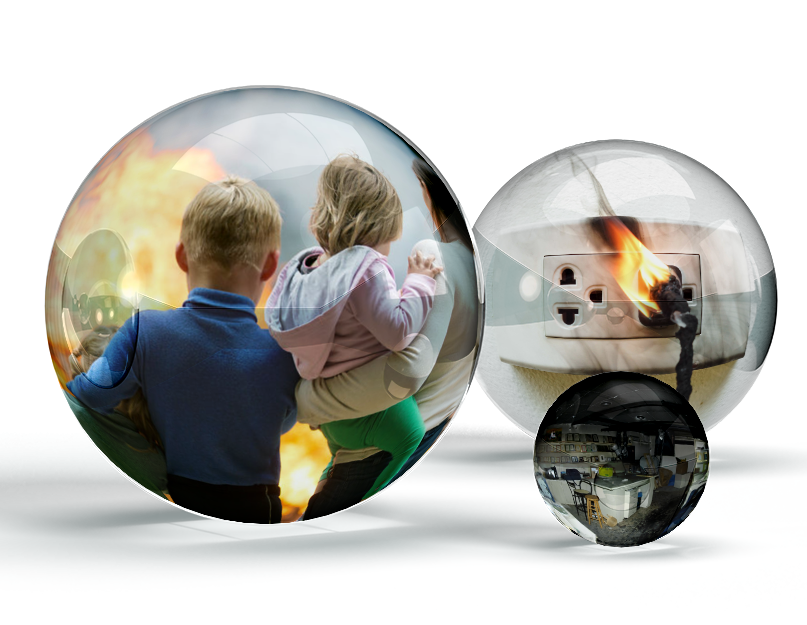 | Smoke and ash | Soot, char and smoke odour in a building that did not burn, and how that damage is documented room by room. |
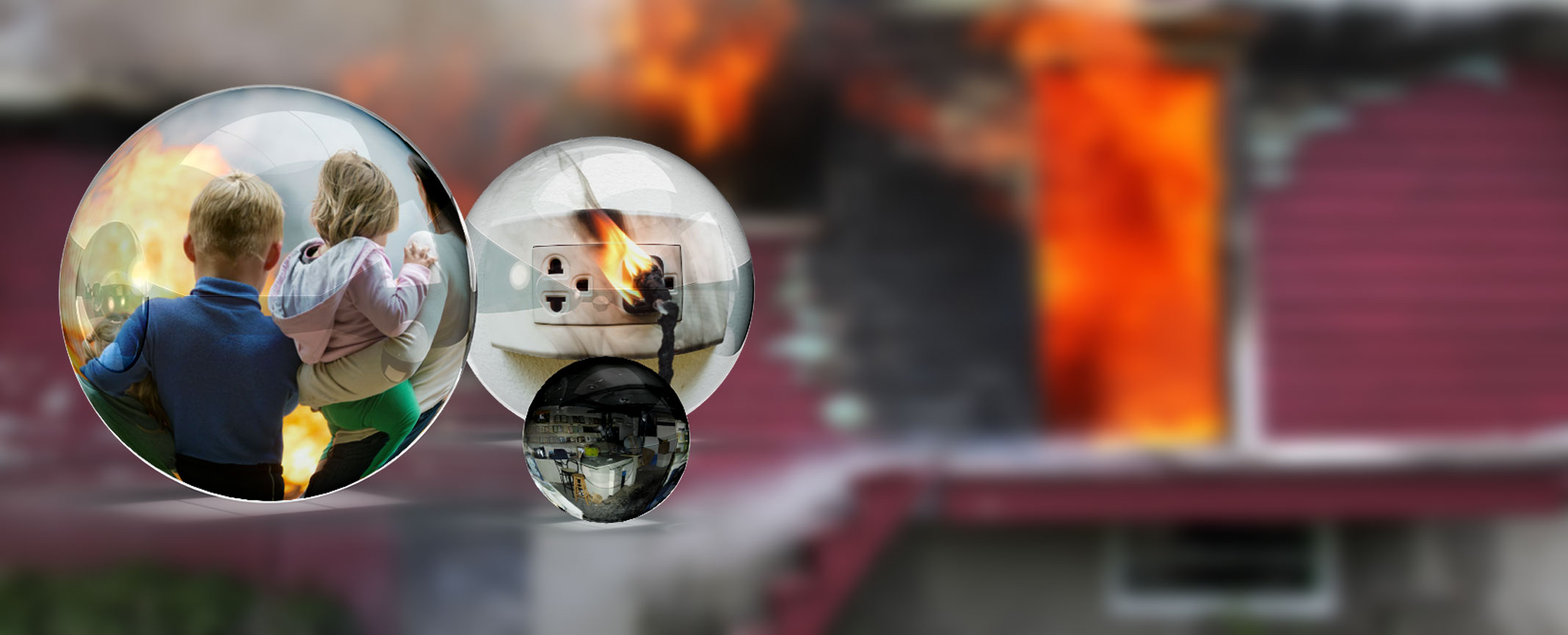 | The structure | Roof, exterior, windows and everything the fire, heat or firefighting effort reached on the building itself. |
 | Contents and living expenses | The inventory of what was inside, and the additional living expenses that follow when a home is not habitable. |
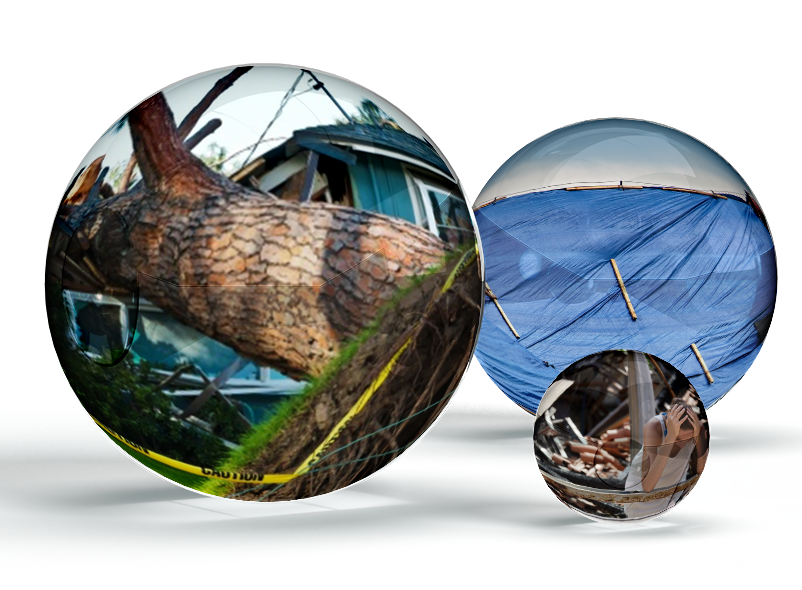 | Other structures and grounds | Detached garages, fences, outbuildings and landscaping that sit outside the main dwelling on the policy. |
Read the declarations page before you argue about anything
Californian homeowners in fire-exposed areas hold very different kinds of policy, and the differences decide the claim. Some are on standard carriers; some are on surplus lines; some are on a plan of last resort with narrower cover. What your policy provides for the structure, for contents, for other structures and for living expenses is written on your own declarations page.
We start every wildfire claim by reading that document with you rather than from a template, because two neighbours whose houses burned in the same hour can be in entirely different positions.
Where wildfire claims come to us from
The wildfire work on this side of our practice concentrates in the foothill and canyon communities of Southern California – Malibu, Calabasas, Santa Clarita, Pasadena, Glendale, Sierra Madre, Santa Monica, Irvine and Fullerton among them – and in the mountain and high-desert markets where the exposure is different again.
Those are also markets with a high proportion of second homes and absentee owners, where damage may be discovered weeks after the event. A delay in discovery is not the same as a delay in reporting, and it is worth getting that distinction right in writing early.
The first two weeks decide a lot
What happens in the days immediately after a wildfire shapes the whole claim, and most of it happens while people are least able to think about paperwork. Photograph everything before anything is moved, cleared or cleaned, including the parts that look undamaged, because proving what was not damaged later is as hard as proving what was.
Keep a written record of every conversation with the carrier – who, when, and what was said – and put anything that matters in writing afterwards. Be careful about signing work authorizations handed to you at the kerbside by contractors who arrived before the adjuster did. And do not dispose of damaged contents until they have been recorded, however unpleasant they are to keep.
Why a public adjuster, and not just the carrier adjuster
The adjuster your insurer sends works for your insurer. That is not an accusation; it is simply whose employee they are. A public adjuster is engaged by the policyholder and represents the policyholder, which means the scope, the inventory and the valuation are prepared from your side of the table.
On an ordinary claim that difference is modest. On a wildfire claim, where the loss is large, the documentation is missing and the household is displaced, it is the difference between a settlement built from your evidence and one built from somebody else’s estimate of what you probably had.
What we do on a wildfire claim
- Read the policy and set out in plain terms what it provides
- Document the loss before anything is cleaned, cleared or repaired
- Build the contents inventory rather than handing you a blank spreadsheet
- Scope the structure, including smoke and ash damage away from the burn
- Include other structures, landscaping and site damage from the start
- Track additional living expenses and present them properly
- Deal with the carrier so that you are not negotiating while you are rebuilding a life
Where to go next
- Fire and smoke damage claims
- California public adjuster services
- Storm damage claims
- Water damage claims
- Recent claims
California Wildfire Claim FAQs
Do I need a public adjuster if my house did not burn down?
Smoke, soot and ash claims are the ones most often reduced or closed early. A public adjuster documents the damage that is not obvious in photographs and presents it in the format the carrier works from.
What does a public adjuster actually do on a wildfire claim?
We inspect the loss, build the estimate and the contents inventory, prepare the additional living expenses record, and handle the correspondence and negotiation with the carrier on your behalf.
Can I bring in a public adjuster after the claim is already open?
Yes. Claims are regularly re-opened or supplemented when new damage is found or when the first estimate did not reflect the whole loss.
What should I gather before we talk?
Your declarations page, the claim number, any estimate or payment the carrier has already issued, and whatever photographs of the property you have from before and after the fire.